The place
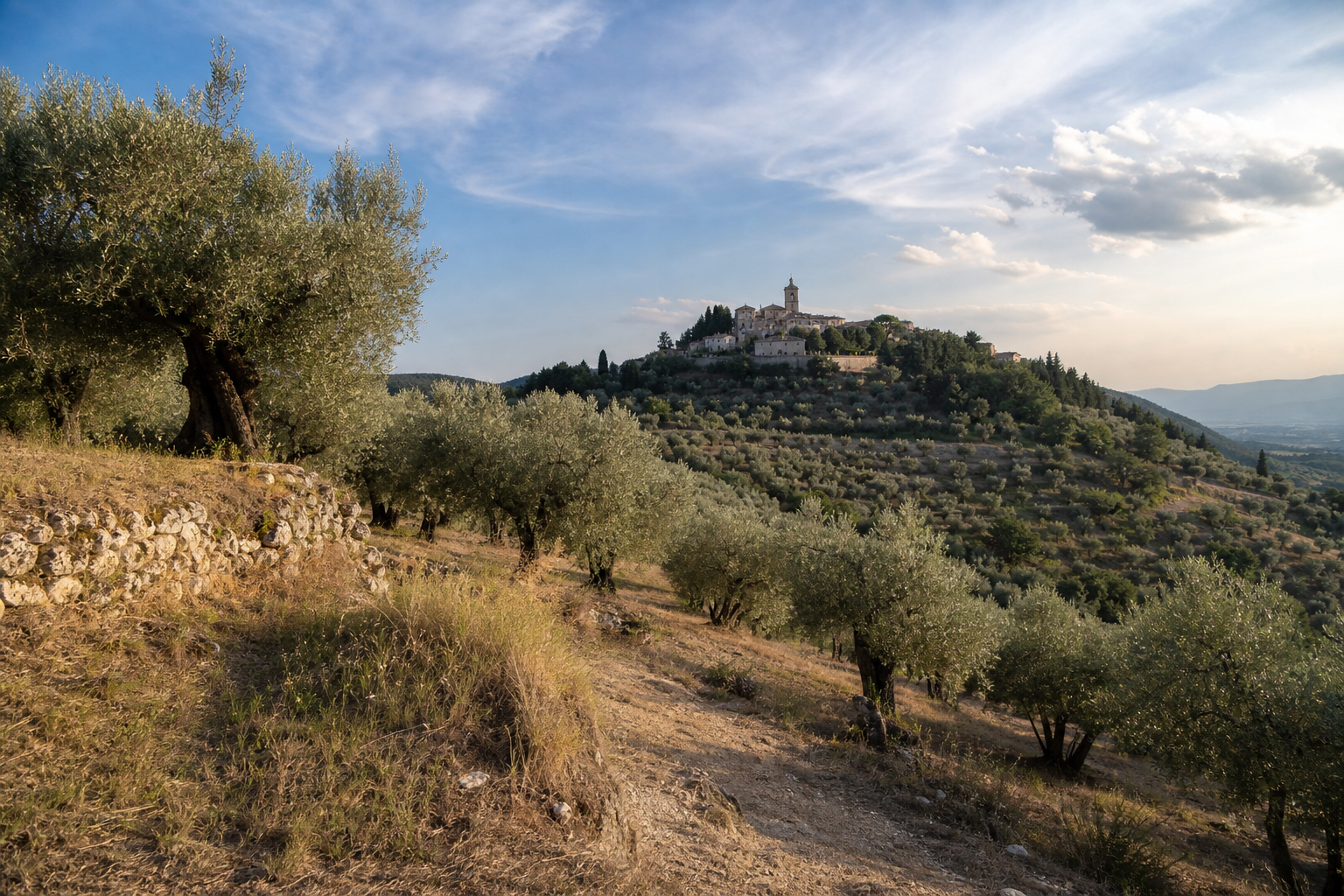
Fara in Sabina.
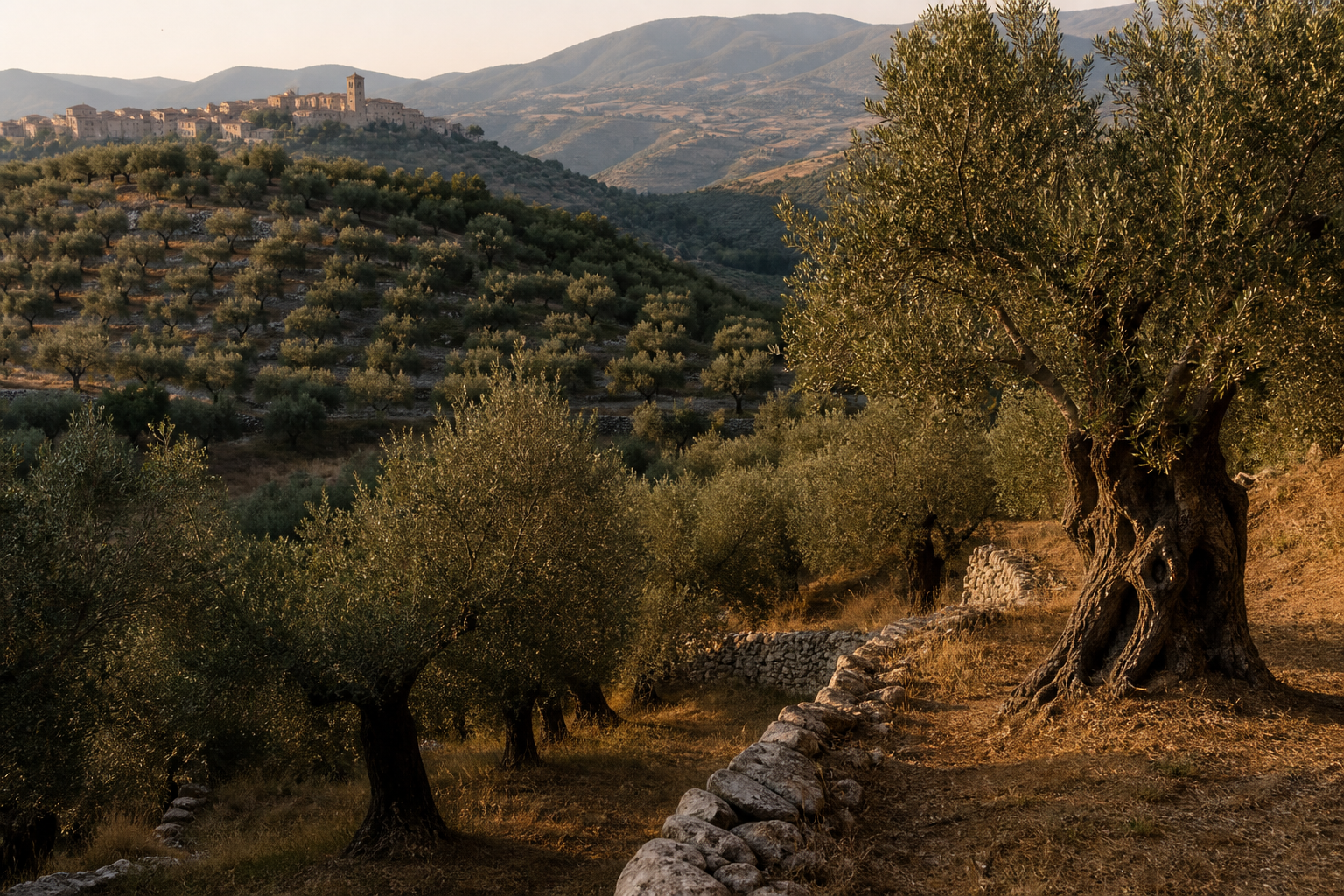
The Sabine microclimate — warm days, cool nights, dry winds off the Lucretili — gives concentrated olives and oils with a green, bitter, peppery profile that is never cloying. Limestone, stony soils poor in humus, and dry-stone terraces send the trees deep. It is a lean land, which does not forgive greed and rewards those who accept the labour.
In these groves the cultivars are not a laboratory catalogue. They are trees the grandparents planted, grafts, mixed rows as was done when each plant had a job: who pollinates, who gives fat, who gives character. Carboncella is the voice of Sabina. Beside it Frantoio, Leccino, Raja and Pendolino make our blend — or, in fortunate years, a monocultivar for tasting. Everything is born here, in Fara in Sabina.
A tradition older than our name
Sabina is one of Italy’s oldest olive lands. The tree did not arrive with twentieth-century fashions: it is Roman, medieval, peasant culture. Dry-stone terraces, village mills, oil kept in jars and used as pay, medicine and seasoning: that is the ground we come from. Fara in Sabina sits in that drawing — exposed hills, stone, low wide trees, harvests done as a family.
Tradition taught us three things we have not changed: you pick when the olive says so, not when the market prefers; you take it to the mill the same day; you do not mix lots you do not know. The rest — certified organic, steel, the decanter — came later, to be worthy of that knowledge, not to replace it.
Cultivars in our groves
Five voices, one landscape. In Classico they stand together. In Carboncella, one speaks alone.
Native to Sabina
Carboncella
Chicory · bitter almond · balsamic herbs · lasting pepper
Carboncella is Fara in Sabina’s identity olive: small, rich, resistant to drought and lean soils. Grandparents planted it because it “holds”, even in dry years. The oil is intense, balsamic, with a noble bitterness and a pepper that stays. It is not an extra virgin to hide in a soffritto: it asks to be tasted raw. It is the backbone of our blend and, in pure form, the monocultivar we bottle in few litres.
Structure of the blend
Frantoio
Herbs · artichoke · noble bitterness · length
Frantoio, which reached Sabina from the traditions of central Italy, gives body and length. On our hills it stays green, never cloying: herbs, artichoke, a bitterness that holds the sip. In Classico it is the frame: it holds Carboncella’s power and Leccino’s softness together. Without it the blend would be shorter, tighter.
Balance and hardiness
Leccino
Almond · apple · softer entry · clean close
Leccino is the most rustic and earliest cultivar. It ripens a little sooner, bears cold better, and in the oil brings elegance: almond, apple, a sweeter entry. That is not weakness: it is measure. In a landscape that tends to intensity, Leccino stops the extra virgin from being only pepper. It is why Classico can be used every day, not only on bruschetta.
A local presence
Raja
Green notes · field herbs · clean finish
Raja is a Sabine presence less told in books, but alive in the old rows. A tree of mixed groves, it gives green, clear oils with a clean finish. We do not keep it for fashion: we keep it because it belongs to this hill, and in the blend it adds a field note that the more “national” cultivars alone do not have.
Pollinator
Pendolino
A quiet voice · pale green · service to the grove
Pendolino, in our groves, first serves the others: it is the pollinator that lets Carboncella, Frantoio and Leccino set fruit. The oil, in a small share, enters the blend with a quiet green voice. Without it the grove yields less — a detail of agronomic tradition that no mill additive can replace.
Sabina is a Protected Designation of Origin landscape: a recognition that comes from this scenery, these cultivars, this way of making oil. Our extra virgins are born in Fara in Sabina; on the label we state origin, cultivar and harvest year, lot by lot.