Three generations
Blanchi, from Fara in Sabina.
Always
Close to the land
Before the brand there was already the family: three generations in Fara in Sabina, the same trees, the same way of being on the hill.
2006
The farm is born
The house oil becomes a farm. Same land, same name, the decision to take it beyond the family — with the rigour it deserves.
Organic
The organic choice
No herbicides, no forcing. An inconvenient choice: make less, and an extra virgin worthy of the trees.
Today
The same aim
Mechanical arm, cold extraction, EVO filtering and storage under nitrogen: the finest organic oil of Fara in Sabina in the world.
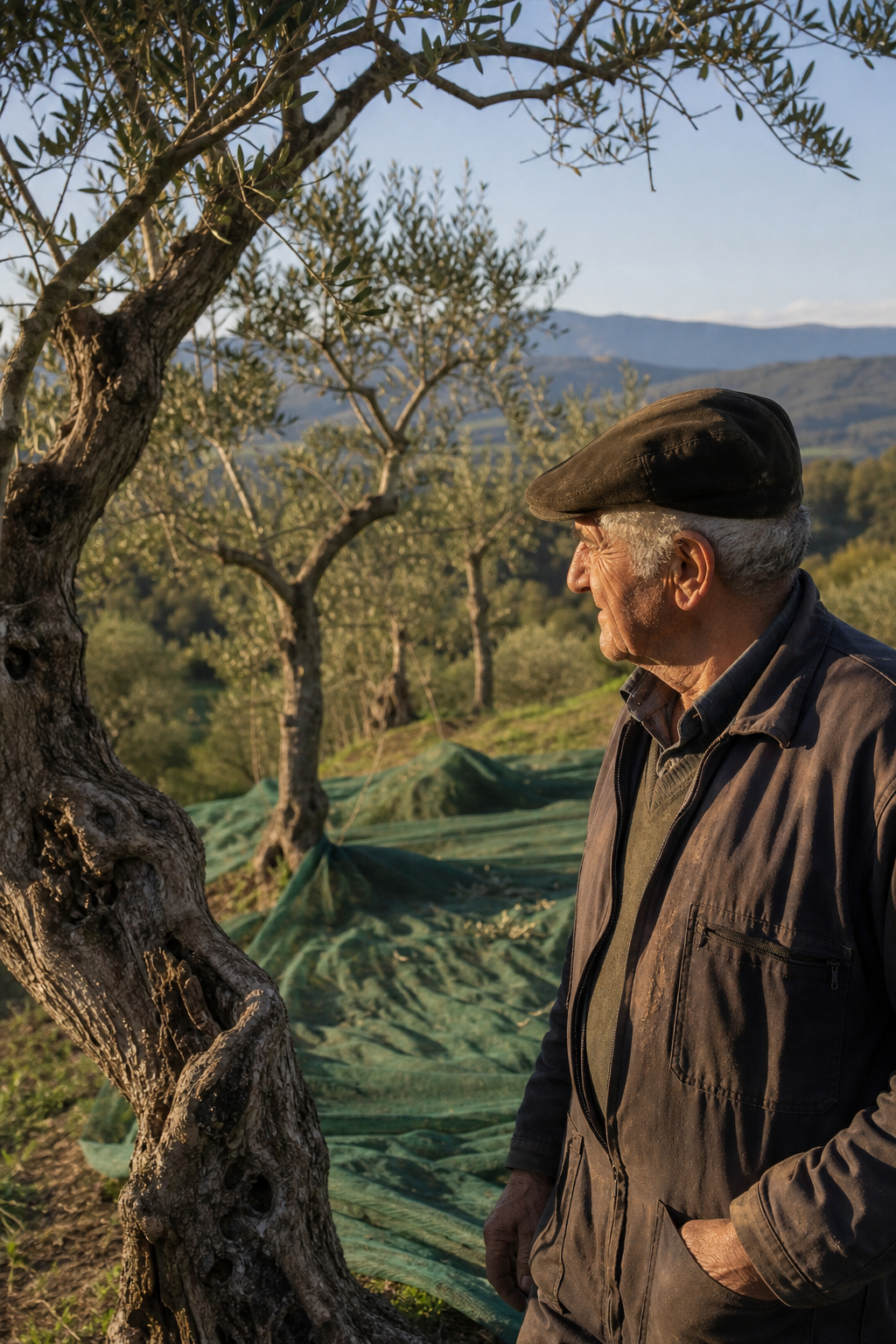
The Blanchi groves look out over the hills of Fara in Sabina, a short way from Rome and yet far from its noise. Some trees are more than a hundred years old; others we planted ourselves, choosing Carboncella, Frantoio, Leccino, Raja and Pendolino — the cultivars that have always had a voice here.
Before the farm there was already the family. For three generations we have been close to this land: oil was food, trade, pride — kept in jars, used to measure the year. There was no brand, only a hill to keep alive. That hill is still ours: the same dry-stone walls, the same dry wind, the same stubbornness.
In 2006 the house oil becomes a farm. Same land, same name, the decision to take it beyond the hearth with the rigour it deserves: organic, traceable, in the bottle. It is not a start from nothing. It is the moment a family’s knowledge takes a public form.
Tradition
In Sabina the olive is not a recent trade.
This land has been oil for millennia. Before us there were already terraces, stone mills, and knowledge passed by voice: when to prune, when to wait, when the olive is ready. The Romans wrote of Sabina as one of Latium’s oil lands; the dry-stone walls that still hold our rows are the same gesture, repeated for centuries: hold the hill, give the tree a palm of soil, ask no more than the stone can give.
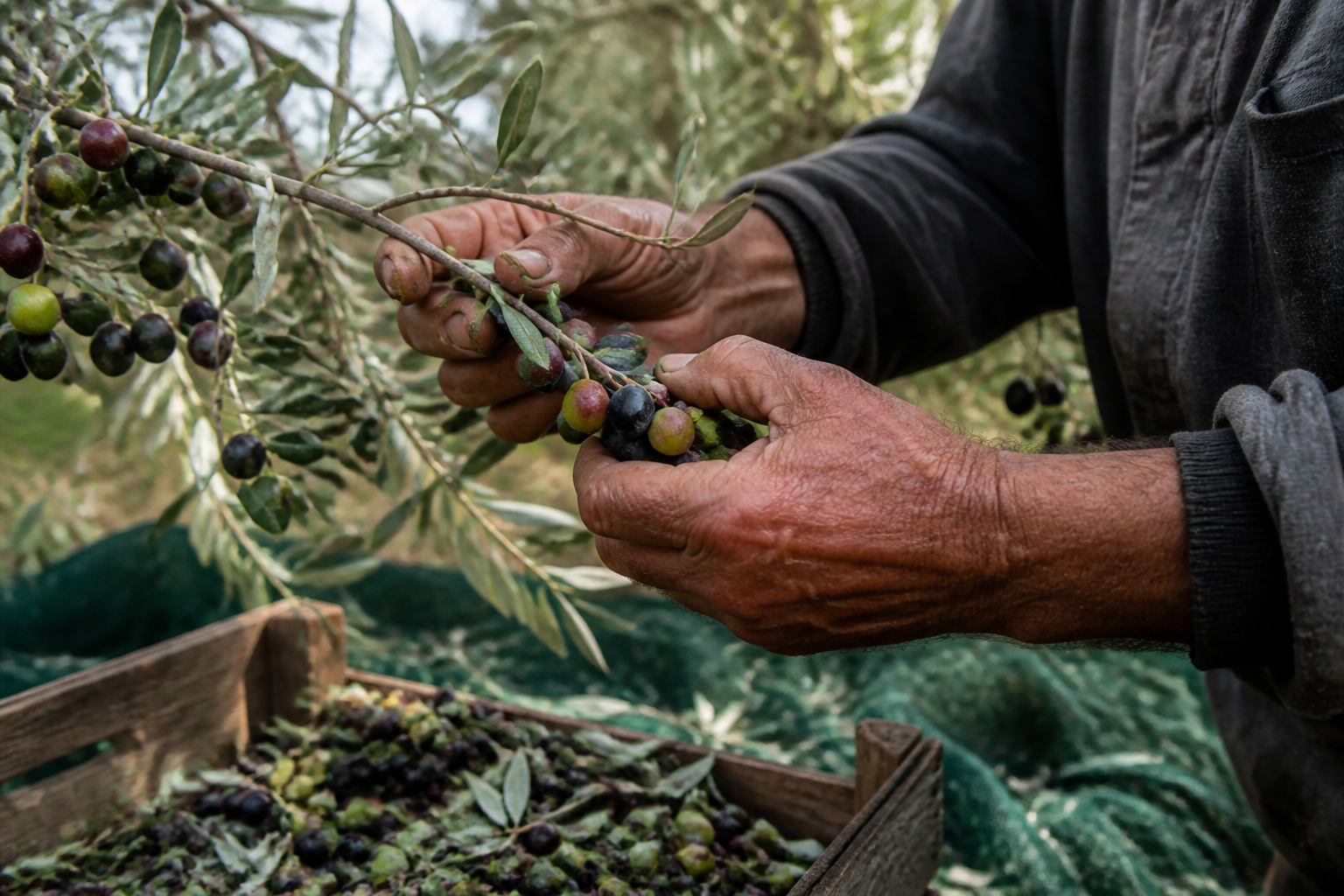
Harvest has always been a family rite. You left at dawn, spread the nets, spoke little. The year’s oil was the winter store, the seasoning of every soup, the gift taken to the sick. At the mill you waited your turn: the sound of the millstones, the green smell of the paste, the first thread of oil on bread. That bread with new oil is still how we judge a vintage — before any lab sheet.
Tradition, for us, is not a costume. It is the discipline we inherited: do not force the tree, do not mix olives from different days, do not sell what we would not drink at home. Organic farming and the continuous mill do not betray that knowledge: they make it stricter. Technology is there so we do not lose what tradition already decided — the character of this hill.
Why organic is worth the labour
Without synthetic chemistry the soil stays alive, the trees slower, the olives more concentrated. It is an oil that costs more to make and less to explain: chicory, almond, green. It tastes of this hill. Whoever tastes it understands why we do not go back.
Organic, for us, is not a trend. It is the honest way to stay true to that land. No herbicides, no synthetic fertiliser, no convenient insecticides. Only pruning, grass, compost, and the pace of the seasons. Whoever works this way knows the litres are fewer. And that the oil, this way, is worthy of the trees.
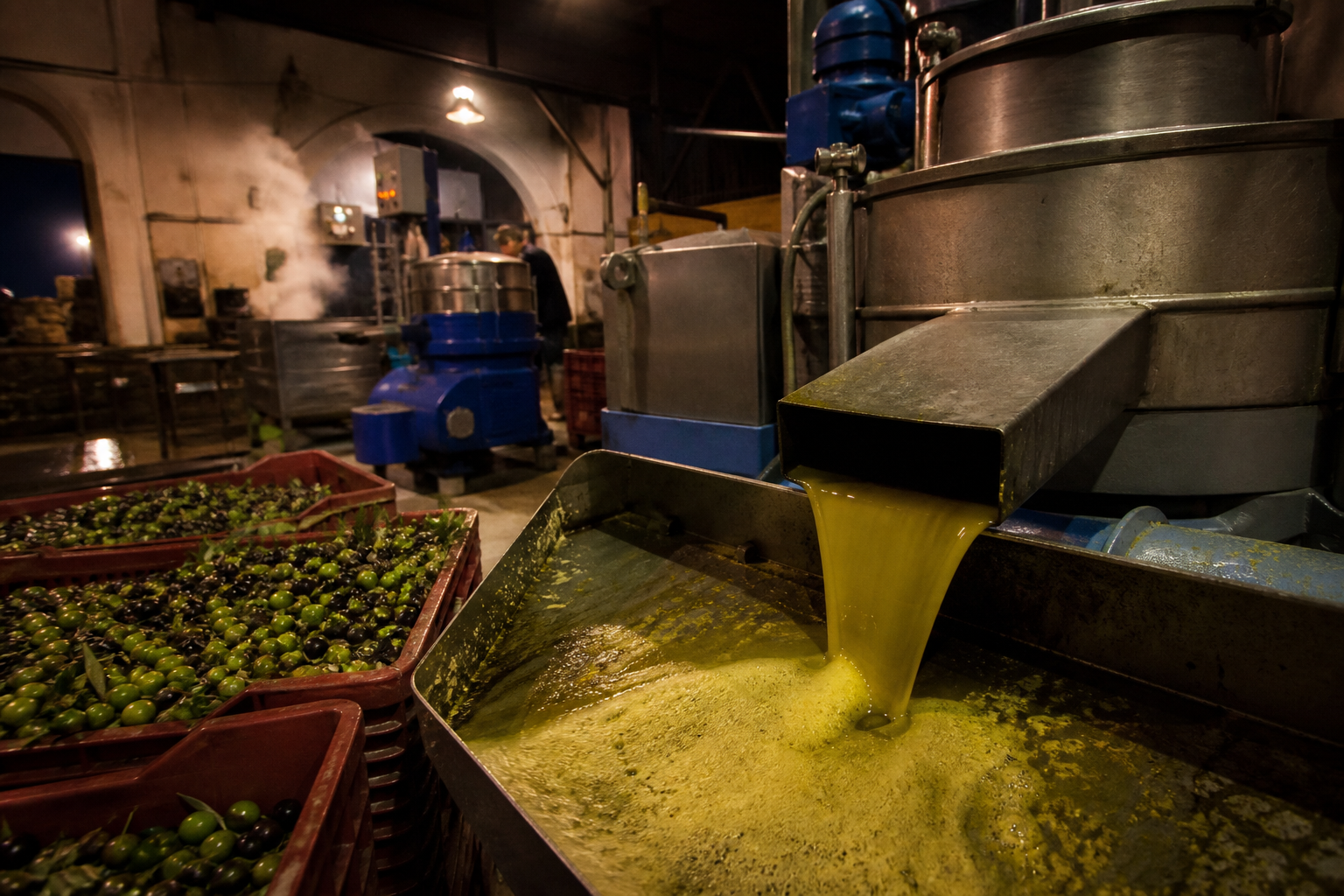
Today at the mill we work cold, continuous cycle, within hours of picking. Every batch is tasted. We bottle in dark glass, on the estate, under the name of those who followed the oil from field to bottle. The aim has not changed: the finest organic oil of Fara in Sabina in the world.
A great oil is not invented in the cellar. It is decided in October, under the trees, while the olive is still alive — and it deserves all the labour that follows.